I’ll admit it—I used to forget how to clean hair brushes, even though I cleaned everything else in my beauty routine religiously. One day I looked down at my paddle brush and realized it looked like a lint trap that had survived a tornado.
Hair, lint, product buildup… I couldn’t ignore it anymore. Since then, keeping my brushes clean has become part of my regular routine, and honestly, my hair behaves better because of it.
If you’ve been putting it off too, you’re definitely not alone. Cleaning a hairbrush isn’t glamorous, but it’s one of the easiest ways to keep your scalp happy and your strands looking their best.
Why should you even learn how to clean hair brushes?
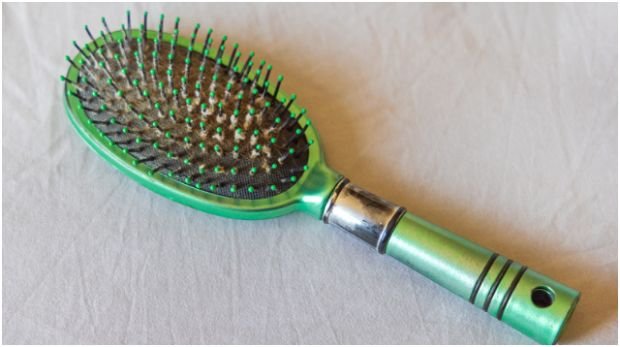
I didn’t realize how much gunk a brush collects until I started inspecting mine closely. Every swipe through your hair picks up oils, skin flakes, styling products, and loose strands. Over time, that buildup transfers right back onto clean hair. It can leave your roots greasier, your scalp itchier, and your blowouts flatter than usual.
When you clean your brush regularly, you remove everything your hair naturally sheds during the day. It keeps your brush working better and your scalp feeling fresher. You also avoid brushing old residue into newly washed hair, which makes a huge difference in how long your clean hair days last.
Most experts recommend cleaning your brushes at least once a month—or weekly if you use heavy products or have long, thick hair. I fall somewhere in the middle depending on how much styling I do that week.
What’s the right way to remove hair from your brush?
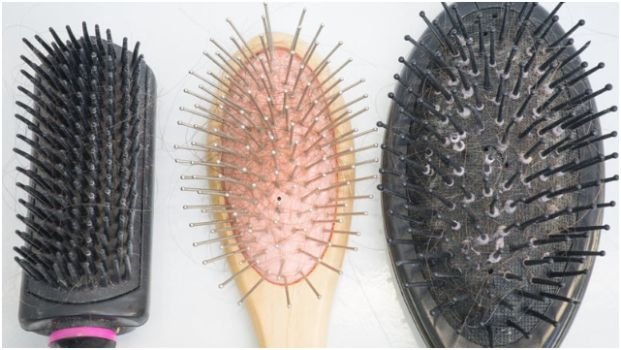
This is the part everyone procrastinates on, but once you get used to it, it becomes second nature. I usually start by pulling out loose hair with my fingers. For round brushes, where strands wrap themselves around the barrel like they’re clinging for life, I use a tail comb to lift the hair.
If I’m dealing with stubborn hair clumps, I grab a pair of scissors and clip straight through the tangled section. Cutting it breaks the tension and makes everything easier to pull out.
A cotton swab or toothpick also helps loosen lint from the base of the bristles. You’d be shocked at how much dust hides down there, especially if you style your hair frequently or use dry shampoo.
Removing hair before washing keeps soapy water from turning into a murky soup and helps your brush dry more effectively.
How do you clean different types of hair brushes safely?
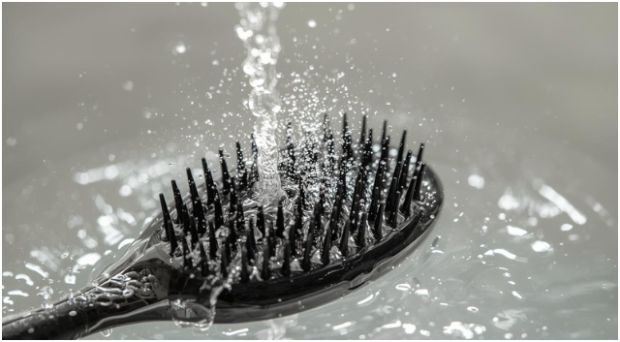
Not all brushes behave the same way when they meet water. The wrong method can warp wood, loosen glue, or weaken natural bristles. Here’s a simple table that shows what each type needs:
| Brush Type | Can You Soak It? | Best Cleaning Method |
| Plastic / Synthetic | Yes | Full soak + scrub |
| Metal / Vented | Yes | Full soak + scrub |
| Wooden | No | Bristle-only dip or spray |
| Natural Bristle | No | Gentle scrub + light misting |
| Cushioned Brush | Partial | Soak only halfway to protect cushion |
For plastic, synthetic, or metal brushes, warm soapy water works perfectly. I fill a bowl with warm water and add a few drops of mild shampoo or dish soap. The warmth loosens oils and helps dissolve styling product residue. A 10–15 minute soak softens everything stuck to the base of the bristles.
For wooden or natural bristle brushes, soaking is a hard no. Wood swells when it absorbs water, and natural bristles can dry out or warp. Instead, I spritz a water-and-shampoo mix directly onto the bristles or dip only the bristle side quickly. This keeps the handle safe while still cleaning the brush head thoroughly.
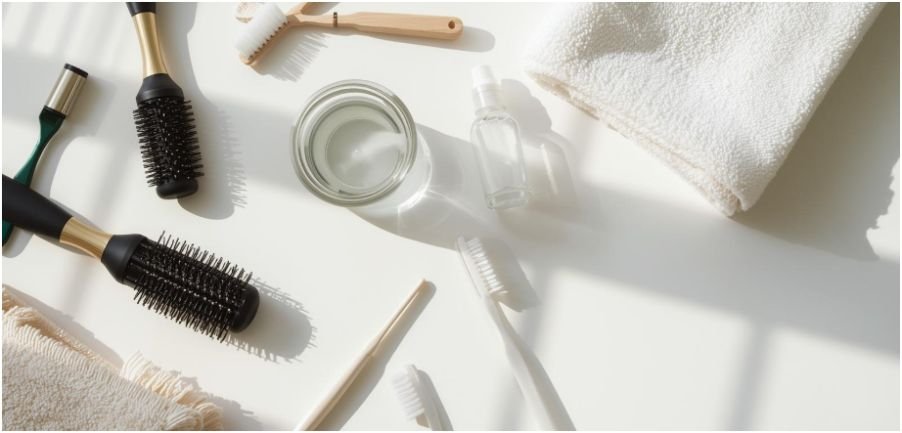
Once the brush is prepped, I scrub the bristles and the base with an old toothbrush. It gets into every little corner and removes the last bits of residue.
How to clean hair brushes step by step? (Easy guide you can save)
Here’s the routine I follow whenever my brushes need a deep refresh:
Step 1: Remove all hair.
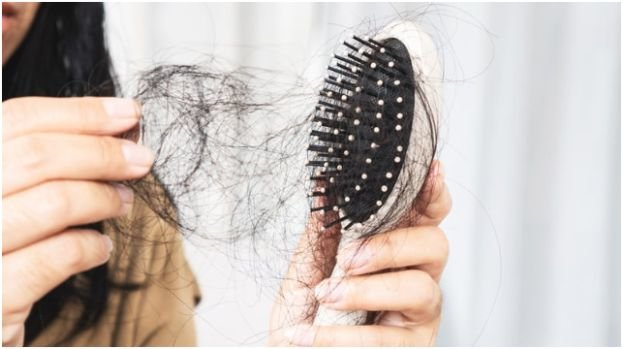 Use your fingers, a tail comb, or a brush-cleaning tool. For round brushes or tangled clumps, snip through the hair with scissors so it releases easily.
Step 2: Mix your cleaning solution.
 Warm water + a few drops of shampoo or mild soap.
Plastic or metal brushes soak fully. Wooden or natural brushes get a bristle-only dip or a gentle spray.
Step 3: Scrub the bristles.
I use an old toothbrush because it reaches the base where buildup hides. Scrub around each bristle row, especially where lint collects.
Step 4: Rinse well.
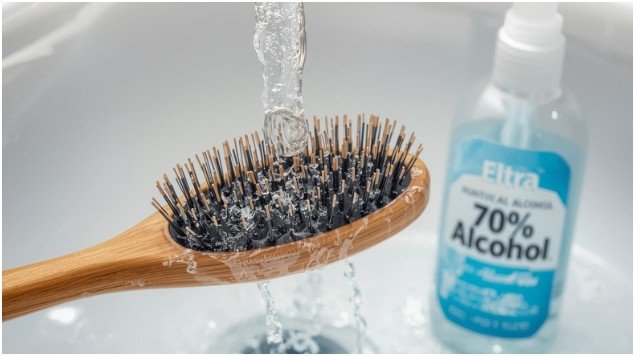 Run warm water through the bristles until the water runs clear. If I want extra freshness, I spray the bristles with 70% rubbing alcohol after rinsing.
Step 5: Dry correctly.
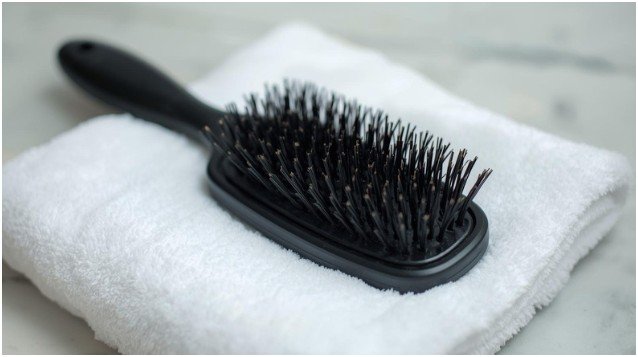 I shake off extra water and set the brush bristle-side down on a clean towel. This position helps moisture drain and prevents mold. I always let it dry overnight to keep it fresh and odor-free.
Which disinfecting solution works without damaging your brush?
If you prefer natural cleaning options, a simple vinegar solution works well. I mix one part white vinegar with two parts water and spray it directly onto the bristles after washing. The acidity helps neutralize odors and bacteria without harming most brush types.
For wooden brushes, I never oversaturate. A light mist is enough. The key is to disinfect without soaking the handle or cushion.
Alcohol sprays also work for quick sanitizing, especially after rinsing. They evaporate fast and leave no residue.
FAQ: What do people usually ask about how to clean hair brushes?
1. How often should I clean my hair brushes?
Most people clean their brushes every month, but weekly cleaning helps if you use a lot of styling products. When you clean regularly, your hair stays fresher and your brush lasts longer. I personally clean my favorite brush every two weeks because product buildup shows fast on my scalp.
2. Can I use hot water while washing my brush?
Warm water works well, but I avoid hot or boiling water. Extreme heat can warp plastic, loosen glue, or weaken natural bristles. Warm water cleans effectively without damaging the brush, so it’s the safest option.
3. What’s the best soap to use for cleaning?
Mild shampoo works best since it’s already designed to break down scalp oils and product residue. Dish soap also works if you use heavy styling products because it cuts through grease easily. I use whichever is closest at the moment.
4. Why does my brush smell even after cleaning?
Lingering odor usually means moisture got trapped in the cushion or base. This happens when the brush isn’t dried bristle-side down. I always let mine dry overnight. A quick mist of rubbing alcohol or diluted vinegar removes any remaining smell.
Sassy Wrap-Up: Ready to Treat Your Hair Like It Deserves?
Cleaning your brushes takes only a few minutes, but it makes your hair feel lighter, cleaner, and more manageable. Once I made this part of my routine, my hair stopped getting greasy so fast and my scalp felt happier.
If you ever wondered how to clean hair brushes without making it a chore, the secret is simple—do it regularly and do it the right way. Your hair will thank you every single time.
My final tip: keep a small brush-cleaning tool or tail comb near your vanity. When removing hair becomes part of your routine, the deep cleaning feels effortless.